Campervan Water System UK — Complete Beginner Guide to Tanks, Pumps and Off-Grid Vanlife

Updated: Feb 26
How to Build a Simple and Reliable Campervan Water Setup for Real UK Travel
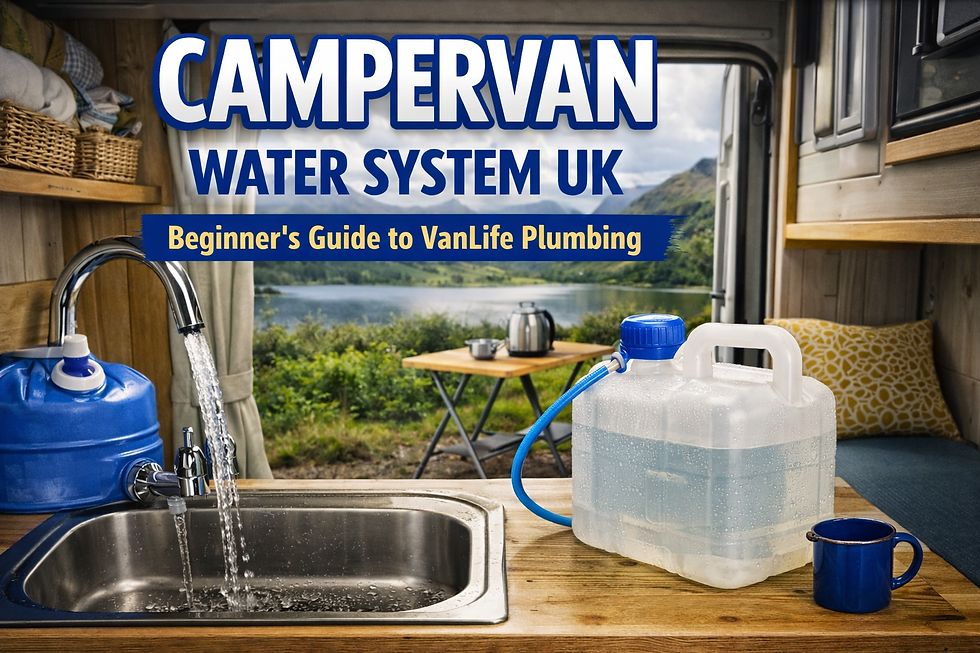
A good campervan water system makes vanlife dramatically more comfortable. From washing up after a muddy coastal walk to making morning coffee without leaving your van, having clean running water changes how you travel around the UK.
The good news is that most campervan water systems are surprisingly simple. You don’t need a complicated motorhome-style setup, just a practical layout that matches your van size, storage space and travel style.
This guide explains how campervan water systems work, what you actually need and how to design a setup that suits British weather, narrow roads and real UK vanlife.
Quick Answer — What Do You Need for a Campervan Water System in the UK?
Most beginner-friendly builds include:
Many UK builders start with a simple removable system and upgrade later once they understand how they actually use water while travelling.
Why a Campervan Water System Matters More Than People Expect
When planning a conversion, water often gets left until the last minute. But your water system affects:
Kitchen layout and storage space
Electrical planning (for pumps)
Weight distribution
Insulation and ventilation
If you’re still designing your interior, our campervan layout design UK guide explains how to plan space for tanks and plumbing before installing furniture.
How to Plan a Simple Campervan Water System UK Builders Actually Use
Step 1 — Understanding Fresh Water Storage Options

There are two main approaches used in UK campervan conversions.
Portable Water Containers
Perfect for beginners and smaller vans.
Benefits:
Easy to refill at UK campsites
Simple installation
Easy to clean and replace
Ideal for micro campers and medium vans where space is limited.
Fixed Water Tanks
More common in larger panel vans.
Advantages:
Greater water capacity
Cleaner interior look
Better for long off-grid stays
However, fixed tanks require more planning around insulation, wiring and furniture placement.
If you’re still choosing a base vehicle, our guide to the best vans to convert into a campervan in the UK explains which vans have enough space for larger water systems.
Step 2 — Choosing the Right Campervan Water Pump

Most UK conversions use a 12V electric pump connected to a tap.
Key features to look for:
Automatic pressure switch
Quiet operation
Low power draw
Water pumps connect directly to your electrical system, which is why understanding campervan electrics UK basics helps when planning wiring routes and fuse protection.
Step 3 — Waste Water and Grey Water Solutions

Every campervan sink needs somewhere for used water to go.
Common UK solutions include:
Removable waste containers
Underslung grey water tanks
Portable external tanks
Removable containers are the most beginner-friendly option and work well for weekend travel.
Step 4 — Plumbing Layout and Hose Choices
Campervan plumbing doesn’t need to be complicated.
Most builds use:
Food-grade flexible hose
Plan your pipe routes early, especially if you’re insulating walls or installing fixed furniture.
If you’re still insulating your van, our campervan insulation UK guide explains how to protect pipework from condensation and cold temperatures.
Step 5 — Sink and Tap Placement
Your sink location affects everything:
Storage space
Bed layout
Electrical routing
Water tank placement
Many UK converters place the sink near the side door for ventilation and easier access to refill containers.
Bed choice can also influence plumbing routes, our fixed bed vs rock and roll bed campervan UK guide explains how layout decisions change interior storage options.
Most campervan kitchens combine plumbing with cooking, so our campervan gas system UK guide explains how gas hobs fit alongside water systems.
Real UK Vanlife Water Tips Most Beginners Miss

Carry a collapsible refill container for remote spots
Use quick-release fittings for easy cleaning
Add a simple inline filter for better water quality
Keep pipe runs short to reduce pump strain
Simple design choices make maintenance far easier when travelling.
How Water Systems Fit Into the Bigger Campervan Build
Your water setup connects with multiple parts of your conversion:
Layout design determines tank placement
Electrics power your pump and lighting
Insulation helps prevent freezing during colder UK nights
If you’re building on a tighter budget, our guide to the cheapest vans to convert into campervans UK shows which vans make compact plumbing installs easier.
Final Thoughts — Keep Your Campervan Water System Simple
The best campervan water system is one that matches how you actually travel. Start simple, learn what you use most and upgrade gradually as your vanlife experience grows.
Explore more UK-specific guides on VanLife.uk to plan electrics, insulation and layout ideas so your campervan feels practical wherever your next adventure takes you.