Campervan Gas System UK — Complete Beginner Guide to Safe LPG Cooking and Heating

How to Build a Safe and Practical Campervan Gas Setup for Real UK Vanlife

Gas is one of the most misunderstood parts of a campervan build. Some people avoid it completely, while others overcomplicate their setup with unnecessary components. In reality, most campervan gas systems used in the UK are simple, safe and incredibly practical when installed correctly.
Whether you want to cook inside your van, boil water for coffee on rainy mornings or add a diesel heater backup system later, understanding how campervan gas works helps you design a safer and more efficient conversion.
If you’re still deciding which base vehicle suits your build, see our best vans to convert into a campervan in the UK guide before planning your gas setup.
This guide explains campervan gas systems in plain English, what you actually need, what UK builders commonly install and how to plan a setup that works for everyday vanlife across Britain.
Campervan Gas System UK — What You Actually Need to Build a Safe Setup
Most beginner-friendly campervan gas setups include:
LPG gas bottle or refillable cylinder
Gas locker or ventilated storage space
Regulator and hose
Hob or portable cooker
Gas isolation valve
Many UK vanlifers start with a simple single-burner system and upgrade later once they understand how often they cook inside the van.
Why Campervan Gas Matters More Than You Think
Gas affects more than just cooking. Your setup influences:
Kitchen layout and storage space
Ventilation and safety planning
Heating options
Weight distribution
Gas appliances should always be planned alongside your interior layout — our campervan layout design UK guide explains how to position kitchens safely before installing furniture.
Step 1 — Understanding LPG Gas for Campervans
Most UK campervans use LPG (liquefied petroleum gas), typically propane.
Why propane is popular in the UK:
Performs well in colder weather
Easy to find refill locations
Reliable pressure for cooking appliances
Butane exists, but many UK travellers prefer propane because it works better during colder months and damp British conditions.
Step 2 — Choosing a Campervan Gas Bottle
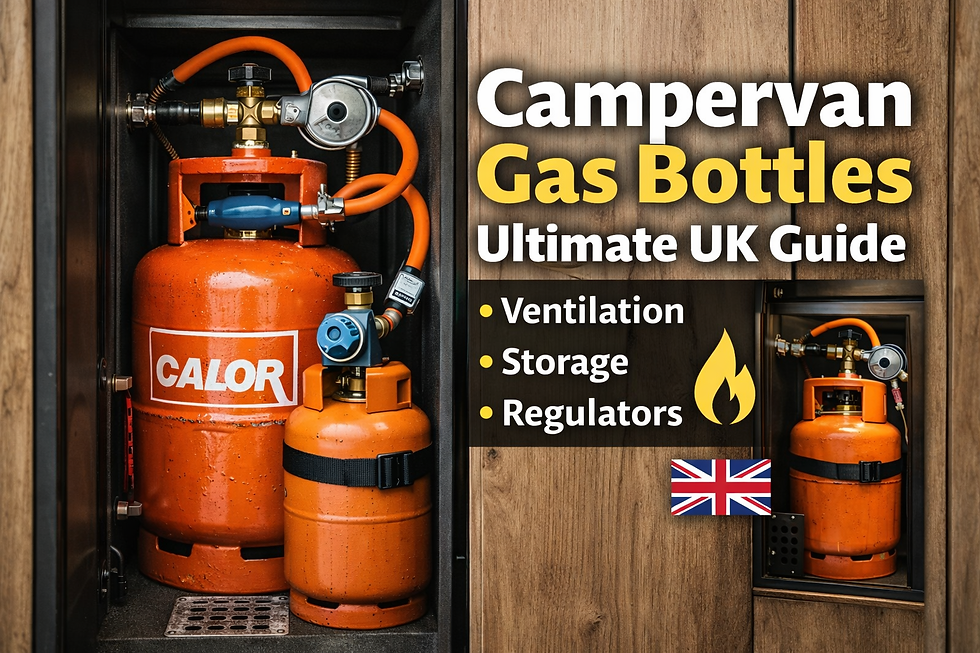
There are two main options used in UK builds.
Portable Gas Bottles
Common for beginner conversions and smaller vans.
Benefits:
Affordable and easy to replace
Simple installation
Flexible storage options
Ideal for micro campers and medium vans with limited cabinet space.
Refillable LPG Systems
More common in larger panel van conversions.
Advantages:
Refill at petrol stations across the UK and Europe
Long-term cost savings
Cleaner installation look
Refillable systems require proper planning around locker ventilation and hose routing.
If you’re still deciding on a base vehicle, our best vans to convert into a campervan in the UK guide explains which vans have enough storage space for built-in gas lockers.
Step 3 — Campervan Gas Locker Safety Basics
Gas lockers are designed to protect you in the unlikely event of a leak.
Key UK safety principles include:
Store bottles upright
Vent lockers through the van floor
Keep regulators accessible
Avoid storing gas inside unventilated cupboards
A simple ventilated locker built into a kitchen unit is the most common solution used by UK converters.
Step 4 — Campervan Cooking Options

Most UK vanlifers keep cooking setups simple.
Popular choices include:
Single or double burner hobs
Integrated kitchen cookers
Portable stoves are great for beginners because they allow outdoor cooking during warmer weather.
Gas cooking setups usually sit alongside plumbing, so our campervan water system UK guide explains how sinks and tanks fit into a safe kitchen layout.
Bed layouts also influence kitchen placement, which is why our fixed bed vs rock and roll bed campervan UK guide is worth reading before installing gas appliances.
Step 5 — Gas vs Electric Cooking — What Works Best in the UK?
Electric cooking sounds appealing, but it usually requires a large battery setup.
Gas remains popular because:
It uses less electrical power
Works reliably during cloudy UK weather
Allows smaller electrical systems
Many UK builders combine gas cooking with a modest electrical setup rather than relying entirely on battery-powered appliances.
Gas systems often work alongside electrical components, so understanding the basics of campervan electrics UK makes planning far easier.
Step 6 — Ventilation and Carbon Monoxide Safety
Safety should always come first with any gas installation.
Essential precautions:
Install a carbon monoxide alarm
Ensure roof vents or windows provide airflow
Keep appliances serviced and checked regularly
Proper airflow works hand-in-hand with insulation choices — our campervan insulation UK guide explains how to balance warmth with safe ventilation.
Real UK Vanlife Gas Tips Most Beginners Miss
Keep spare gas hose clips in your tool kit
Position cookers near sliding doors or windows
Use heat-resistant surfaces around burners
Avoid oversizing your gas system, simple builds are easier to maintain
Most vanlifers find that a small, well-designed cooking setup works better than a large kitchen.
Many budget builds keep gas systems simple, see the cheapest vans to convert into campervans UK guide for ideas that suit smaller interiors.
How Gas Fits Into the Bigger Campervan Build
Gas connects with multiple parts of your conversion:
Water systems influence sink and cooker placement
Electrics power ignition systems and lighting
Insulation affects ventilation and heat control
If you’re building on a budget, our cheapest vans to convert into campervans UK guide shows which vans make compact kitchen builds easier.

Final Thoughts — Keep Campervan Gas Simple and Safe
Want to build a fully functional campervan kitchen? Explore our guides to campervan electrics UK, campervan water system UK, and campervan insulation UK to plan every part of your conversion safely.
You don’t need a complicated LPG setup to enjoy vanlife in the UK. A simple, well-ventilated cooking system is often the best starting point. Focus on safety, plan your layout carefully and upgrade gradually as your travel style evolves.
Explore more UK-specific guides on VanLife.uk to design electrics, water systems and layouts that work together to create a campervan that feels practical wherever you travel.