Van Life in 2025: A UK Year in Review
- VanLife.uk

- Dec 30, 2025
- 24 min read
2025 Was the Year Van Life Stopped Being a Clever Trick

For a long time, van life in the UK felt like a clever trick you weren’t supposed to tell anyone about.
A workaround. A loophole. A slightly smug answer to the question, “How on earth are you affording to live?”
By the end of 2025, that illusion was completely gone.
Van life didn’t collapse. It didn’t get banned. It didn’t “end”. But it did something far more significant: it collided head-on with reality. With councils. With costs. With emissions policy. With the simple fact that when enough people do the same thing, it stops being invisible.
If the early 2020s were the golden age of “just park up and see what happens”, then 2025 was the year van life in the UK became:
Regulated
Counted
Charged
And occasionally frowned at by a laminated sign cable-tied to a fence
This article is a full, honest look back at what van life in the UK was actually like in 2025, not the filtered version, not the rage-bait headlines, and not the rose-tinted nostalgia.
It’s for:
People who lived in vans full-time
People who tried and bailed
People who are still planning
And people who keep asking, “Is van life still worth it?”
Let’s rewind the year properly.
Van Life Before 2025: Why This Year Felt Different

To understand why 2025 mattered, you have to understand what came before it.
Between 2020 and 2022, van life exploded. For reasons we all know:
Lockdowns
Remote work
A broken rental market
And the realisation that paying £900 a month for a damp box wasn’t mandatory
Vans became homes almost overnight. Not always legally, not always comfortably, but decisively.
By 2023 and 2024, the novelty wore off:
Vans got more expensive
Councils started paying attention
Locals got louder
And social media became saturated with the same three shots of fairy lights and enamel mugs
Then came 2025 — the year when:
Policies stopped being theoretical
Costs stopped being avoidable
And van life stopped being “alternative” and started being normal
And when something becomes normal, it gets rules.
Van Life by the Numbers in 2025 (The Stuff That Quietly Changed Everything)

Van life doesn’t exist in a vacuum. It’s shaped by vehicle markets, housing pressure, fuel costs, emissions policy, and public tolerance, all of which showed clear trends in 2025.
The UK vehicle market in 2025 (why van lifers should care)
Even if you never buy a brand-new van, the new vehicle market controls the used one. And in 2025, several trends mattered a lot:
New vehicle registrations cooled compared to the post-pandemic rush
The used van market stayed tight, especially for reliable diesel vans
Electric vehicles continued their steady rise, passing 1.6 million licensed vehicles on UK roads
For van lifers, this translated into:
Fewer cheap base vans appearing
Older vans holding value longer than expected
A sense that “I’ll just replace it later” was no longer a safe assumption
The days of picking up a half-decent panel van for a few grand were already gone. 2025 confirmed they weren’t coming back.
The used van market: stable, expensive, unforgiving
In 2025, used vans:
Didn’t spike dramatically
Didn’t crash
Just… stayed stubbornly expensive
Especially:
Euro 6 diesels
Medium wheelbase vans
Vehicles with clean histories and sensible mileage
For people entering van life, this meant:
Higher upfront costs
Less room for error
More pressure to buy “right first time”
For existing van lifers, it meant:
Holding onto vans longer
Investing more in maintenance
Becoming emotionally attached to vehicles they once planned to replace
Why 2025 didn’t feel like a boom or a bust
One of the strange things about 2025 was how uneventful it felt in headline terms.
There was no van life “crash”. No sudden ban. No single dramatic moment.
Instead, the year was defined by accumulation:
A few more charges here
A few more signs there
A few more stories of fines, complaints, and forced moves
It wasn’t dramatic. It was gradual.
And that’s why it mattered.
The Cost of Van Life in 2025 (And Why the “Cheap Living” Myth Finally Died)

If there’s one idea that 2025 quietly killed off, it’s this:
“Van life is cheap.”
It can be cheaper than renting. It can be cheaper than owning a house. But cheap, in absolute terms? No.
The real monthly costs of UK van life in 2025
While everyone’s setup is different, most full-time UK van lifers in 2025 landed somewhere around:
Fuel
£250–£450 per month
More if roaming constantly
Less if semi-static or rural
Insurance
£60–£120 per month
Often rising year-on-year
Modified vehicles pushing premiums higher
Maintenance & repairs
£80–£250 per month (averaged across the year)
One breakdown can erase months of savings
Campsites, stopovers, paid parking
£100–£300 per month
Rising as councils clamp down on free overnighting
Utilities & connectivity
Gas, electric, mobile data, subscriptions: £80–£150
Realistic total:👉 £600–£1,200+ per month
Still cheaper than many rents. But not the fantasy some people were sold.
The unpredictability problem
What really defines van life costs isn’t the average, it’s the spikes.
In 2025, many van lifers faced:
£800 repair bills
Insurance renewals jumping unexpectedly
Fuel costs swinging month to month
Emissions charges appearing out of nowhere
Van life didn’t get unaffordable, it got financially spiky.
Which meant:
Emergency funds mattered
Budgeting mattered
And pretending breakdowns “won’t happen to me” stopped working
Why 2025 Was the Year Van Life Stopped Being a Housing Hack

For years, van life was framed as:
A protest against high rent
A rejection of the housing market
A clever workaround
In 2025, that framing stopped fitting.
Not because van life failed, but because it became part of the system it was trying to sidestep.
Councils started asking:
Where are these vans going?
How long are they staying?
Who is responsible for waste, noise, and parking pressure?
And once those questions get asked, regulation follows.
Van life stopped being invisible.
The Emotional Shift of 2025: From Freedom to Friction
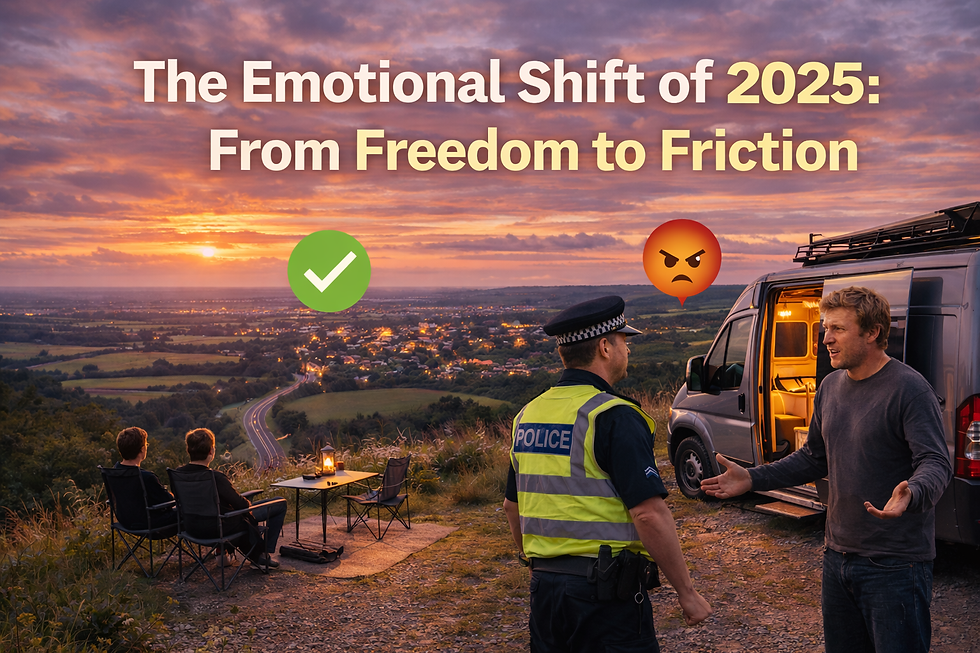
One of the least talked-about changes in 2025 was emotional.
Van life used to feel light. Loose. Forgiving.
In 2025, many people described it as:
Heavier
More planned
Less spontaneous
Not because the lifestyle changed, but because the context did.
Every overnight stop carried questions:
Is this allowed?
Will we be moved on?
Is there a sign I missed?
Is this area fed up with vans?
Freedom didn’t vanish, but it came with a mental checklist.
Clean Air Zones in 2025 — From Background Noise to Daily Reality
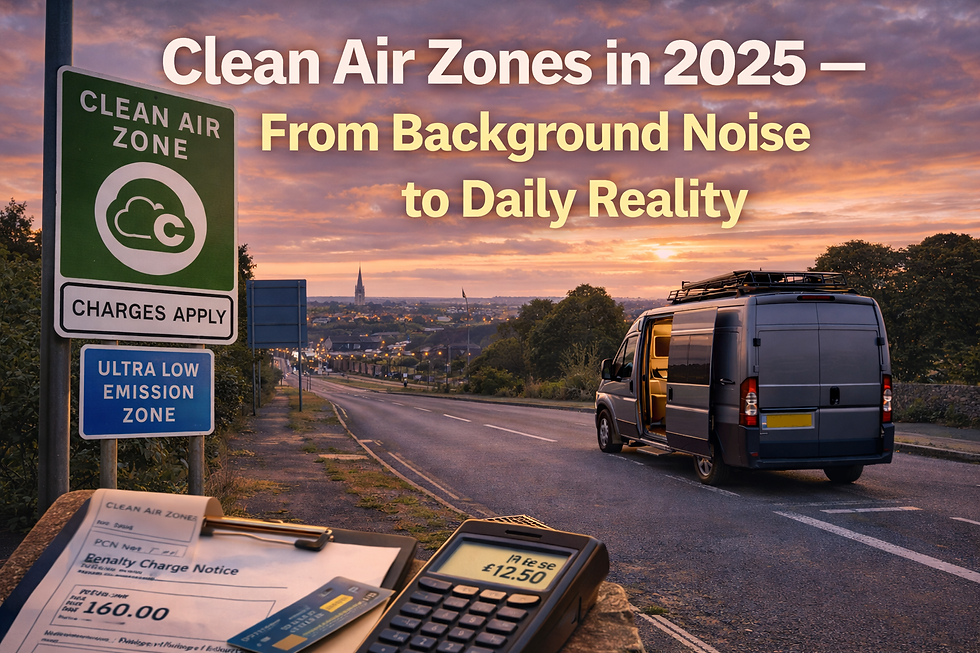
Clean Air Zones didn’t arrive suddenly in 2025.
They crept.
They expanded quietly, city by city, year by year, until van lifers reached a point where ignoring them was no longer an option.
For many people living in vans, 2025 was the year Clean Air Zones stopped being a political debate and became a line item in the monthly budget.
Why Clean Air Zones Hit Van Lifers Harder Than Most
On paper, Clean Air Zones are neutral. They apply to vehicles, not lifestyles.
In reality, van lifers were hit disproportionately hard for a few reasons:
Vans skew older Many camper conversions are based on older diesel vans, bought precisely because they were affordable and mechanically simple.
Conversions don’t change emissions A bed, a kitchen, and a solar panel don’t make your exhaust cleaner, no matter how wholesome the van looks on Instagram.
Your vehicle is also your home Paying a daily charge isn’t like paying congestion charge for a commute. It’s a cost attached to where you exist.
Classification matters more than people realise Two visually identical vans could be treated completely differently depending on how the DVLA categorised them.
By 2025, this combination created real pressure.
ULEZ: The Template Everyone Else Is Watching
You can’t talk about emissions policy in the UK without talking about London.
By 2025, London’s Ultra Low Emission Zone (ULEZ) was:
Fully expanded across Greater London
Enforced entirely by ANPR cameras
Socially normalised (even if still controversial)
For van lifers, ULEZ wasn’t just a London problem, it was a proof of concept.
Once a scheme works technically and financially at that scale, it becomes far easier for other councils to say:
“We could do that.”
And many of them did.
“I Never Go to London” — Why That Argument Stopped Working
Throughout 2025, a common refrain popped up in van life forums and Facebook groups:
“ULEZ doesn’t affect me. I never go to London.”
In theory, fine.
In practice, 2025 exposed how fragile that assumption was.
People ended up triggering ULEZ charges because:
A sat-nav rerouted them unexpectedly
They clipped the edge of the zone on the way to somewhere else
They needed a specialist mechanic
They were visiting friends or family
They didn’t realise how wide the zone had become
ULEZ taught van lifers a harsh lesson: emissions policy doesn’t care about your intentions.
Regional Clean Air Zones: The Patchwork Problem
While London grabbed headlines, the real story of 2025 was regional Clean Air Zones becoming normalised.
Cities with established or active CAZs affecting vans included:
Birmingham
Bristol
Bath
Manchester
Sheffield
Each one had:
Different emissions thresholds
Different daily charges
Different exemptions
Different signage quality (often poor)
This created what many van lifers described as administrative fatigue.
It wasn’t just the cost — it was the constant checking.
The Real Enemy Wasn’t Cost — It Was Complexity
If every Clean Air Zone worked the same way, van life would have adapted quickly.
But in 2025, complexity was the real problem.
Van lifers had to navigate:
Different rules for private vs commercial vehicles
Different treatment of motor caravans vs panel vans
Weight thresholds that weren’t obvious
Councils interpreting national guidance differently
This led to genuine confusion, not rule-breaking.
Many people only learned the rules after being charged.
Motor Caravan vs Panel Van: The 2025 Classification Nightmare

One of the most painful lessons of 2025 was this:
Looking like a campervan doesn’t mean you’re treated like one.
Clean Air Zones typically classify vehicles based on:
DVLA body type
Vehicle category (N1, M1, etc.)
Weight and emissions standard
This meant:
A beautifully converted camper could still be charged as a commercial van
A factory motorhome might be treated more leniently
Two near-identical vans could face different charges
For DIY converters, this was brutal.
Reclassification: The Great 2025 Rabbit Hole
As Clean Air Zone pressure increased, many van lifers turned to DVLA reclassification as a potential solution.
2025 saw a surge in people attempting to:
Change body type to “Motor Caravan”
Update V5C details
Gather photographic evidence
Navigate inconsistent guidance
The results were mixed.
Some succeeded. Many didn’t. Others discovered that reclassification didn’t change CAZ charges anyway.
This led to widespread frustration and a growing realisation: vehicle classification is not fit for the modern van life reality.
Daily Charges: How Small Fees Added Up Fast

One of the most deceptive aspects of Clean Air Zones was how reasonable the charges looked.
£8.£10.£12.50.
But van life isn’t static.
In 2025, van lifers reported:
Paying CAZ charges multiple times per week
Avoiding cities altogether to save money
Or spending hours rerouting journeys
Over a month, those “small” charges often reached:
£50
£100
Or more
For people already living close to the wire, this mattered.
How Van Lifers Adapted in 2025 (Behavioural Shifts)
Van life didn’t collapse under emissions policy.
It adapted.
1. Route planning became essential
Van lifers got very good at:
Checking CAZ maps
Double-checking sat-nav routes
Using emissions-aware navigation tools
Spontaneity took a hit.
2. Cities became “in-and-out” stops
Urban visits became:
Shorter
More purposeful
Less relaxed
Lingering overnight near cities became riskier and more expensive.
3. Paid sites gained appeal
Ironically, Clean Air Zones pushed some van lifers towards:
Campsites
Formal stopovers
Paid parking areas outside cities
Not because they loved them but because predictability became valuable.
The Psychological Impact: Van Life Felt Less Invisible

One subtle but important shift in 2025 was how watched van lifers felt.
ANPR cameras. Databases. Automatic billing.
Van life stopped feeling like:
“I’m quietly passing through.”
And started feeling like:
“Everything about this journey is logged.”
That doesn’t imply wrongdoing but it changes behaviour.
People became more cautious. More deliberate. More aware of boundaries.
Were Clean Air Zones “Anti–Van Life”?
This question came up constantly in 2025.
The honest answer: no, but they weren’t designed with van life in mind either.
The argument for Clean Air Zones
Air quality matters
Health impacts are real
Diesel pollution disproportionately affects urban communities
From that perspective, van life isn’t special.
The argument against (from van lifers)
Vans are homes, not luxuries
Replacing a vehicle isn’t trivial
Charges hit lower-income travellers harder
Rules were poorly communicated
2025 didn’t resolve this tension, but it brought it into the open.
Did Clean Air Zones Push People Towards Electric Vans?
Yes, but slowly.
By 2025:
CAZs were a major reason people considered electric vans
But cost, range, and charging still held most back
Clean Air Zones nudged behaviour. They didn’t revolutionise it overnight.
The Big 2025 Realisation: This Is the Direction of Travel
Perhaps the most important lesson of 2025 was this:
Clean Air Zones are not temporary.
They are:
Gradually expanding
Becoming more normal
Politically easier to implement once established
For van lifers, that meant:
Planning long-term
Thinking about future vehicles
Accepting that “just avoid cities forever” isn’t always realistic
What 2025 Taught Van Lifers About Emissions Policy
By the end of the year, several lessons were clear:
Know your vehicle’s classification
Check compliance before every city visit
Budget for emissions charges
Don’t assume camper = exempt
Plan your next van with policy in mind
Van life didn’t lose freedom in 2025.
It gained paperwork.
Electric Campervans in 2025 — No Longer a Joke, Still Not the Answer for Everyone

For years, the idea of electric van life sat somewhere between “future fantasy” and “YouTube thumbnail nonsense”.
In 2025, that changed.
Electric campervans didn’t suddenly become perfect, but they crossed an important threshold: they became a genuine option for some people, rather than a novelty for influencers and manufacturers’ press photos.
At the same time, 2025 made something else clear:
Electric van life in the UK is not a one-size-fits-all solution — and pretending otherwise helps nobody.
This was the year hype met lived reality.
The Context: Why EV Vans Became a Serious Topic in 2025
Electric vans weren’t new in 2025, but pressure converged from multiple directions:
Clean Air Zones made older diesels increasingly awkward
Manufacturers pushed harder on electric LCVs
Fuel prices remained volatile
Public charging infrastructure expanded (unevenly, but visibly)
Policy language shifted from “encouragement” to “expectation”
For van lifers, the question changed from:
“Should I ever consider electric?”
To:
“Am I going to be forced into this eventually?”
2025 didn’t answer that question, but it made it unavoidable.
What Actually Improved for Electric Vans in 2025
Let’s start with the good news, because there was some.
1. Range numbers became less embarrassing
Earlier electric vans often struggled to hit 100 miles in real-world conditions.
By 2025:
Realistic ranges of 150–200 miles became common on newer models
Efficiency improved slightly
Regenerative braking made urban driving less punishing
This mattered because it moved electric vans out of the “local delivery only” category and into “short-to-medium journey” territory.
Still not ideal, but usable.
2. Charging infrastructure visibly expanded (with caveats)
In 2025, it became undeniable that:
There were more chargers
They were easier to find
Rapid chargers were more common on major routes
Motorway service stations improved. Retail parks leaned into charging. Some rural councils even trialled community chargers.
But and this is a big but, availability did not equal reliability.
3. Electric vans stopped being treated as novelties
In earlier years, EV vans felt like:
Experiments
PR exercises
Something manufacturers barely wanted to support
By 2025:
Dealers were more knowledgeable
Insurance products improved slightly
Breakdown services were less confused
Aftermarket converters started taking EVs seriously
This psychological shift mattered as much as the technical one.
The Big Problems That Didn’t Go Away

Now for the part nobody likes putting on Instagram.
Range anxiety didn’t vanish, it just got more specific
By 2025, range anxiety wasn’t about “will it run out?”
It was about:
How cold is it?
How heavy is the van?
How much electric am I using inside?
Is the charger actually working?
Electric vans made van lifers hyper-aware of consumption in a way diesel never did.
Winter range was still brutal
This was one of the biggest wake-up calls of 2025.
UK winters aren’t extreme, but they are damp, cold, and miserable for batteries.
In real-world winter conditions:
Range reductions of 20–40% were common
Heating use hit battery hard
Condensation management became a power issue
For anyone living full-time in an electric van, winter planning wasn’t optional, it was survival maths.
Charging etiquette remained chaotic
If you want to understand why some van lifers still avoided EVs in 2025, spend an afternoon watching people try to charge.
Common issues:
Chargers blocked by cars not charging
Broken or offline units
Apps not working
Payment systems failing
Long queues at peak times
Charging wasn’t just a technical task, it was a social negotiation.
The Rural UK Problem (Still Very Real)
Electric van life in 2025 worked best in:
Cities
Motorway corridors
Well-funded regions
It struggled in:
Remote Wales
Large parts of Scotland
Coastal areas
National parks
Anywhere beautiful and inconvenient
Rural charging remained:
Sparse
Inconsistent
Sometimes entirely absent
For van lifers drawn to quiet places, this was a dealbreaker.
Living in an Electric Van: Power Isn’t Just for Driving
One thing 2025 highlighted sharply was this:
In a campervan, electricity isn’t just fuel — it’s life support.
Electric vans had to power:
Heating
Cooking (often)
Lighting
Fridges
Work setups
Water systems
This created a constant balancing act:
Do I drive to charge?
Or conserve to stay put?
Or freeze slightly to make the numbers work?
Diesel vans had spoiled people with separation:
Engine fuel
Living power
Electric vans merged them and that changed everything.
Solar Panels: Helpful, Not a Solution
A common misconception in 2025 was that solar would “solve” electric van life.
It didn’t.
Solar helped with:
Daytime trickle charging
Reducing parasitic drain
Supporting electronics
But in the UK:
Winter solar is weak
Overcast days dominate
Roof space is limited
Solar was an assist, not a replacement.
The Cost Reality of Electric Van Life in 2025
EVs are often marketed as “cheaper to run”.
That was… complicated.
Where electric vans saved money
Lower per-mile energy costs (sometimes)
No diesel price spikes
Fewer moving engine parts
Where they cost more
Higher purchase price
Insurance quirks
Charging fees at rapid chargers
Specialist repairs
Depreciation uncertainty
For many van lifers, the maths only worked if:
They had home charging
They stayed semi-static
They avoided rapid chargers
Full-time roaming often erased the savings.
Who Electric Van Life Actually Worked For in 2025
By the end of the year, patterns were clear.
Electric campervans worked best for:
Urban or suburban van lifers
People with reliable home charging
Weekend travellers
Short-range digital nomads
People willing to plan meticulously
They struggled for:
Full-time roamers
Winter travellers
Remote explorers
Anyone who hates planning
EV van life rewarded patience and punished improvisation.
The Emotional Divide: Early Adopters vs Realists
2025 exposed a growing cultural split within van life.
On one side:
Early adopters
Optimists
People willing to accept inconvenience
People who enjoyed the challenge
On the other:
Pragmatists
Long-term full-timers
Rural travellers
People who valued simplicity
Neither side was wrong, but pretending electric vans were “ready for everyone” caused friction.
Clean Air Zones as the EV Pressure Lever
Electric vans weren’t embraced because they were perfect.
They were embraced because alternatives were becoming harder.
Clean Air Zones:
Made older diesels expensive
Nudged people towards Euro 6 or EV
Changed long-term planning
For many van lifers, EVs weren’t about ideology, they were about future-proofing.
The Big Question of 2025: “Do I Switch Now or Wait?”
This question came up constantly.
By the end of 2025, the consensus looked like this:
If your current diesel works: keep it
If you’re buying new: consider EV seriously
If you roam remotely: wait
If you live near cities: EVs make sense sooner
Electric van life wasn’t inevitable in 2025, but it was clearly coming.
What 2025 Taught Van Lifers About Electric Vans
The year delivered some hard-earned lessons:
EVs are tools, not miracles
Infrastructure matters more than range claims
Winter changes everything
Rural travel is still the hardest case
Planning is non-negotiable
Electric van life didn’t fail in 2025.
It just stopped being oversold.
Wild Camping in 2025 — Rights, Myths, and the Van Life Confusion Problem

If there was one outdoor topic in 2025 guaranteed to generate heat, misinformation, and Facebook meltdowns, it was wild camping.
Not just whether it should be allowed, but what people thought it meant.
By 2025, “wild camping” had become a catch-all phrase used to describe:
Backpacking with a tent
Sleeping in a car
Parking a campervan overnight
Staying in the same layby for a week
Or simply “being somewhere rural after dark”
This confusion mattered, because policy, tolerance, and enforcement depended on it.
The Dartmoor Moment: Why It Mattered (and Why It Was Misunderstood)
One of the most significant outdoor stories of 2025 was the legal confirmation of the right to wild camp on parts of Dartmoor.
This was widely celebrated, and widely misinterpreted.
What the ruling actually did
Confirmed the legal right to wild camp on foot on Dartmoor Commons
Reinforced historic access rights
Set an important cultural precedent for outdoor access
What it did not do
It did not grant permission to park campervans anywhere
It did not override local parking restrictions
It did not apply to the rest of England
Yet in 2025, van lifers repeatedly encountered the argument:
“But wild camping is legal now.”
That misunderstanding caused friction, and it wasn’t harmless.
The Core Problem: Van Life Got Lumped In With Everything Else
In 2025, van life suffered from association overload.
Councils, landowners, and residents often didn’t distinguish between:
Responsible overnight parking
Backpackers leaving no trace
Long-term informal camps
Fly-tipping operations
Party vans with generators
Everything became “van life”.
That wasn’t fair, but it was reality.
And reputation matters.
Scotland: Freedom, Friction, and the Limits of Tolerance
If England wrestled with access confusion in 2025, Scotland wrestled with scale.
Scotland’s outdoor access laws are famously permissive, but van life tested those limits hard.
The NC500 effect
The North Coast 500 remained:
One of the UK’s most beautiful routes
One of the most strained
By 2025, the issues were well established:
Overflowing bins
Human waste near popular spots
Verge erosion
Informal camps becoming semi-permanent
Local frustration wasn’t new, but it was sharper.
“It’s Not Anti-Tourism — It’s Pro-Community”
One of the biggest misconceptions among van lifers in 2025 was assuming pushback equalled hostility.
In reality, many Scottish communities were saying:
“We want visitors — but we need limits.”
Problems arose when:
Infrastructure lagged behind visitor numbers
Councils lacked resources
A minority of travellers behaved badly
Enforcement felt inconsistent
Van life didn’t cause the problem alone, but it became the visible symbol of it.
Increased Signage, Enforcement, and Local Measures
Throughout 2025, van lifers in Scotland noticed:
More “no overnight parking” signs
More physical barriers
More patrols
More pressure to use designated sites
This wasn’t a sudden crackdown.
It was the result of years of accumulated pressure finally being addressed.
Wales: Quietly Reaching Its Limit
While Scotland got the headlines, Wales experienced similar pressures, just more quietly.
In 2025:
Coastal areas saw rising van numbers
Small villages felt overwhelmed
Parking pressure increased dramatically in summer
Welsh councils faced the same dilemma:
Encourage tourism
Protect communities
Manage waste and parking
Van lifers often underestimated Wales, and that worked against them.
Coastal Pressure: Why the Seaside Became a Flashpoint
Across England, Wales, and Scotland, coastal areas were among the first to push back in 2025.
Why?
Because coastal van life often concentrates:
In small car parks
Near residential areas
On fragile land
With limited waste facilities
When problems occurred, they were visible and local.
In 2025, many councils chose:
Overnight bans
Height barriers
Reduced parking access
Not because vans were evil, but because unmanaged demand broke systems.
The Behaviour Question: 2025 Was the Year It Became Unavoidable
Here’s the uncomfortable truth that 2025 forced into the open:
Van life’s future depends on behaviour — not aesthetics.
It didn’t matter how tasteful the conversion was. Or how wholesome the Instagram feed looked.
What mattered was:
Waste
Noise
Duration of stay
Respect for signage
Interaction with locals
And in 2025, tolerance thinned.
The Generator Problem (Yes, That One)

If you want a single object that symbolised van life friction in 2025, it was the portable generator.
Generators:
Turn quiet spots into camps
Annoy residents instantly
Create visual and noise pollution
Signal permanence
In many places, the presence of generators alone was enough to trigger complaints.
2025 made it clear:
If you want to stay welcome, generators are a liability.
Long-Stay Vans: The Grey Area That Sparked Conflict
Another issue that came to a head in 2025 was duration.
Most tolerance is built around:
One night
Passing through
Minimal impact
Problems arose when:
Vans stayed for days or weeks
Locations effectively became informal camps
Locals felt displaced from their own spaces
This blurred the line between:
Travel
Housing
And occupation
Councils responded predictably.
Why “But I Pay Road Tax” Stopped Working as an Argument
One argument lost almost all traction in 2025:
“I pay road tax, so I can park here.”
Legally, it was never strong. Socially, it collapsed entirely.
Road tax doesn’t cover:
Waste disposal
Local infrastructure
Environmental impact
Community disruption
By 2025, councils and residents were unimpressed.
The Reputational Reckoning of 2025
Perhaps the most important shift of 2025 wasn’t legal, it was cultural.
Van life stopped being seen as:
Quirky
Alternative
Romantic
And started being seen as:
A housing choice
A tourism model
A pressure on local services
That shift forced van lifers to ask uncomfortable questions:
How long do I stay?
Where do I go to the toilet?
What does my presence cost this place?
Ignoring those questions no longer worked.
The Rise of “Responsible Van Life” (Not as a Hashtag)
In response, 2025 saw:
More discussion of leave-no-trace principles
More peer pressure within van life communities
More guides on responsible parking
More acceptance of paid stopovers
This wasn’t about virtue signalling.
It was about survival.
Paid Stopovers: From “Sell-out” to Sensible
One of the quietest but biggest shifts of 2025 was the changing attitude to paid stopovers.
What once felt like:
“Defeating the point of van life”
Became:
“Buying predictability and goodwill”
Many van lifers accepted that:
£10–£20 for a night
Is cheaper than a fine
And cheaper than losing access entirely
Paid options didn’t replace free ones, but they stabilised things.
What 2025 Taught Van Lifers About Access
By the end of the year, several truths were unavoidable:
Access is conditional, not guaranteed
Behaviour shapes policy
One bad group affects everyone
Free doesn’t mean unlimited
Respect is strategic, not sentimental
Van life didn’t lose freedom in 2025.
It learned the cost of keeping it.
Social Media Van Life in 2025 — When the Aesthetic Finally Cracked

For nearly a decade, van life on social media followed a familiar script.
Sunrise shots. Open doors. Bare feet. Enamel mugs. A caption about “freedom”.
By 2025, that script was exhausted.
Van life content didn’t disappear, but it changed tone, and that change mattered.
This was the year where:
Performative minimalism stopped convincing people
The downsides stopped being hidden
And creators quietly admitted that living in a van isn’t a permanent holiday
The fantasy didn’t collapse overnight, it wore out.
The Saturation Problem: When Everyone Posts the Same Van
One reason social media van life shifted in 2025 was simple: oversaturation.
By then:
Thousands of near-identical builds existed
Layouts converged
Colour palettes blurred together
“Unique” vans looked suspiciously familiar
When everyone is posting the same thing, novelty dies.
Audiences became harder to impress, and more suspicious.
The Algorithm Changed — and So Did Incentives
Another quiet force reshaping van life content in 2025 was platform economics.
Algorithms increasingly favoured:
Short-form video
High engagement
Emotional hooks
Relatable struggle
Which meant:
Perfect van life stopped performing as well
Messy, honest content did better
Reality became more clickable than aspiration
Creators adapted, not always comfortably.
The Rise of “Actually Living in a Van” Content
2025 saw more creators openly sharing:
Bad weather days
Breakdown stress
Financial pressure
Relationship strain
Loneliness
The sheer admin of van life
This wasn’t virtue, it was necessity.
Audiences could smell fiction.
The Influencer Divide: Who Thrived and Who Burned Out
By the end of 2025, a clear split had emerged.
Creators who thrived
Treated van life as content, not identity
Had multiple income streams
Were honest about compromises
Didn’t pretend van life solved everything
Creators who struggled
Built brands on perfection
Felt trapped maintaining an image
Relied entirely on van life for relevance
Couldn’t admit they were tired
Burnout wasn’t rare in 2025, it was visible.
The Pressure of Living Where You Work (And Posting It)
Van life has always blurred lines between:
Home
Work
Leisure
Social media intensified that.
In 2025, creators talked openly about:
Never switching off
Filming instead of resting
Turning breakdowns into content
Feeling guilty for stopping
The van became:
A home
A workplace
A stage
Not everyone wanted that, or could sustain it.
Remote Work in Vans: The Dream vs the Daily Reality

Beyond influencers, 2025 was also a reckoning year for remote workers in vans.
Working from a van was still possible, but it wasn’t magical.
What worked
Asynchronous work
Freelancing
Project-based roles
Flexible schedules
What struggled
Video-heavy jobs
Fixed hours
High-bandwidth demands
Always-on availability
The myth that “any job can be done from a van” finally faded.
Connectivity in 2025: Better, But Still Uneven
Mobile coverage improved steadily, but not evenly.
In 2025:
Urban and suburban coverage was strong
Major routes were reliable
Rural black spots persisted
Coastal and mountainous areas remained patchy
Van lifers learned to:
Scout signal ahead of time
Carry multiple networks
Build routines around connectivity
The internet wasn’t guaranteed, it was negotiated.
Starlink: Helpful, Not a Silver Bullet
Starlink continued to loom large in 2025 conversations.
For some, it was transformative. For others, impractical.
It worked best for:
Semi-static van lifers
Rural dwellers
People with clear skies
Those who could afford it
It struggled with:
Tree cover
Urban density
Power consumption
Constant movement
Starlink didn’t “solve” connectivity, it shifted the trade-offs.
The Mental Health Side of Van Life (Finally Talked About)
One of the healthiest developments of 2025 was openness around mental health.
Van life has unique pressures:
Isolation
Uncertainty
Weather dependency
Mechanical anxiety
Social disconnection
In 2025, people started admitting:
Freedom can be lonely
Flexibility can be destabilising
Constant movement can erode routines
The romantic silence broke.
Loneliness: The Unfiltered Reality
Loneliness isn’t guaranteed in van life, but it’s common.
2025 saw more honest conversations about:
Missing community
Losing casual social contact
Feeling disconnected
The effort required to maintain relationships
Van life wasn’t antisocial, but it demanded intention.
Relationships in Vans: Tested, Not Broken
Living in a small space amplifies everything.
In 2025:
Some couples thrived
Others struggled
Many admitted it was harder than expected
Van life didn’t create problems, it removed escape routes.
Communication mattered more. Space mattered more. Expectations mattered more.
The Myth of “Permanent Van Life”
Another idea that quietly died in 2025 was permanence.
More people admitted:
They lived in vans for a phase
They mixed van life with renting
They house-sat
They stayed with family seasonally
Van life became:
A strategy
A chapter
A tool
Not a lifetime identity.
The Shift from Aesthetic to Practical
By the end of 2025, the van life aesthetic changed.
Less:
White interiors
Open shelving
Fragile styling
More:
Practical layouts
Insulation
Storage
Durability
Repairability
Vans stopped being show homes and started being homes again.
Why 2025 Made Van Life More Honest
In hindsight, 2025 didn’t damage van life culture.
It matured it.
The year stripped away:
Pretence
Unrealistic expectations
Performative minimalism
What remained was:
A workable lifestyle
With trade-offs
And real benefits
For the right people
Councils, Enforcement, and Why 2025 Felt Like a Crackdown (Even When It Wasn’t)

Ask van lifers what 2025 felt like, and one word comes up again and again:
“Stricter.”
More signs. More patrols. More tickets. More complaints.
But here’s the important distinction that 2025 made painfully clear:
Most councils didn’t suddenly change their attitude — they ran out of tolerance.
This wasn’t ideological. It was logistical.
Why Councils Became More Active in 2025
From a council perspective, van life pressure built up in very predictable ways.
The core problems councils faced
Increased van numbers in the same locations
Complaints from residents
Limited enforcement budgets
Lack of designated infrastructure
Conflicting public expectations
Councils were expected to:
Support tourism
Protect communities
Improve air quality
Manage waste
Avoid discrimination
And somehow not upset anyone
Van life sat right at the intersection of all of that.
Why “Just Leave Us Alone” Was Never a Sustainable Strategy
For years, van life benefited from being:
Too small to matter
Too niche to regulate
Too ambiguous to confront
By 2025, that invisibility was gone.
When councils received:
Repeated complaints
Photos
Social media posts
Local pressure
They had to act.
Doing nothing was no longer neutral, it became a political decision.
The Enforcement Shift: From Reactive to Proactive
One of the biggest changes in 2025 was how enforcement happened.
Previously:
Someone complained
Someone showed up
Something happened (or didn’t)
In 2025:
Councils installed signage pre-emptively
Patrols became routine
Parking orders were updated
Physical barriers appeared
This felt like a crackdown, but it was often just delayed housekeeping.
Inconsistent Enforcement: The Thing That Frustrated Everyone
If there was one legitimate grievance van lifers had in 2025, it was inconsistency.
Some places:
Allowed overnight stays quietly
Used discretion
Communicated clearly
Others:
Installed sudden bans
Issued fines without warning
Provided no alternatives
The problem wasn’t rules, it was surprise.
Van life thrives on predictability, even when limits exist.
Paid Stopovers: From “Defeats the Point” to “Actually Sensible”
Few ideas shifted as much in 2025 as attitudes to paid stopovers.
What once felt like:
“Selling out the lifestyle”
Became:
“Buying certainty, safety, and goodwill”
Paid stopovers offered:
Legal overnight parking
Waste disposal
Sometimes water or toilets
Reduced stress
Clear expectations
In 2025, many van lifers accepted a hard truth: free isn’t always cheaper.
Why Councils Like Paid Stopovers (And Why That Matters)
From a council’s perspective, paid stopovers solved multiple problems at once:
Concentrated overnight parking
Reduced random verge camping
Provided waste infrastructure
Generated revenue
Reduced complaints
That made them politically attractive.
And once something becomes politically attractive, it tends to spread.
The Risk: Van Life Becoming Too Formalised
There was also a genuine concern in 2025:
What if van life becomes so regulated that it loses its soul?
Some van lifers worried about:
Over-commercialisation
Loss of spontaneity
Pay-to-exist models
Reduced access for low-income travellers
These concerns weren’t imaginary.
The balance between freedom and management became one of the defining tensions of the year.
Van Life and the UK Housing Crisis: The Uncomfortable Overlap

By 2025, it was impossible to ignore this:
A significant number of people weren’t living in vans by choice.
They were there because:
Rent was unaffordable
Housing was unstable
Waiting lists were endless
Temporary accommodation was inadequate
Van life blurred into housing insecurity.
And councils noticed.
Why This Made Policy Harder, Not Easier
Once van life overlapped with housing pressure, everything became sensitive.
Councils had to avoid:
Criminalising poverty
Displacing vulnerable people
Appearing hostile to alternative living
At the same time, they faced:
Public complaints
Legal obligations
Environmental targets
There were no clean answers, only trade-offs.
The End of “Van Life as a Protest”
In earlier years, van life was often framed as:
A rejection of the housing market
A protest against capitalism
A statement of independence
By 2025, that framing felt outdated.
Van life wasn’t outside the system anymore.
It was inside it, negotiating terms.
What 2025 Really Changed About UK Van Life
When you strip away the noise, 2025 changed five fundamental things:
1. Visibility
Van life became impossible to ignore.
2. Expectation
Behaviour standards rose, whether people liked it or not.
3. Planning
Spontaneity decreased; foresight increased.
4. Legitimacy
Van life stopped being fringe and became a recognised mode of living and travel.
5. Responsibility
Freedom became conditional on impact.
What Didn’t Change (Despite the Panic)
It’s just as important to say what didn’t happen in 2025:
Van life wasn’t banned
Overnight parking didn’t disappear
Travel didn’t become impossible
Freedom didn’t vanish
The narrative of “the end of van life” never matched reality.
Van life didn’t end, it grew up.
The Van Lifers Who Thrived in 2025
The people who did best in 2025 shared common traits:
They planned routes
They respected limits
They adapted vehicles strategically
They accepted paid nights when needed
They didn’t treat free spaces as entitlements
Van life rewarded pragmatism.
The Van Lifers Who Struggled
Those who struggled often:
Refused to adapt
Ignored local context
Stayed too long in one place
Relied on outdated assumptions
Took enforcement personally
2025 was unforgiving to rigidity.
Looking Ahead to 2026 and Beyond
Based on 2025, some trends feel inevitable:
More Clean Air Zones
More paid stopovers
More EV pressure
More council involvement
More emphasis on behaviour
Van life in the UK is becoming:
Less chaotic
More structured
More integrated into policy
That’s not inherently bad, but it does require adjustment.
Is Van Life Still Worth It After 2025?
The honest answer:
Yes — if you understand what it is.
Van life in 2026 won’t be:
A loophole
A free ride
A rebellion
It will be:
A lifestyle
With costs
Rules
Responsibilities
And rewards
For the right people, it’s still extraordinary.
Final Thoughts: 2025 Was the Year Van Life Became Real

If history looks back on van life’s modern era, 2025 will stand out.
Not because it was dramatic .Not because it was cruel. But because it was clarifying.
It stripped away:
Illusions
Shortcuts
Excuses
What remained was something sturdier: A sustainable way to live and travel, if done well.
Van life didn’t die in 2025.
It stopped pretending.
Thanks for Reading 🚐
If you’ve made it this far, thank you, genuinely. This wasn’t a quick skim or a listicle; it was a proper deep dive into what van life in the UK actually looked like in 2025, warts and all.
If this article made you nod, laugh, argue internally, or think “yes, that’s exactly it”, then it’s probably worth sharing.
Please share this article
Share it with other van lifers
Share it in Facebook groups (brace yourself for the comments)
Share it with someone who keeps saying “I’m thinking of doing van life”
The more realistic conversations we have about van life, the better it gets for everyone, from access and tolerance to infrastructure and understanding.
Thanks for reading, and safe travels wherever you park up next.